Home / Kōshū Kaidō / Naitōshinjuku
Naitōshinjuku 内藤新宿

| Kōshū Kaidō (甲州街道) | Station 1 of 44 · Nihonbashi (Edo) → Kamisuwa (joins the Nakasendō) |
|---|---|
| Present-day location | Edo, Tokyo, Japan |
| Prefecture | Tokyo (Kanto region) |
| Distance from Nihonbashi | About 7.9 km (by the historical station tables) |
| Next station | 下高井戸宿 — about 7.9 km on |
| Coordinates | 35.68881° N, 139.70942° E |
Kondo Yoichi is one of the post towns set up in Edo period. It was also the start point of the Kondoshashaki Street Road, which is branching with Kadeshai, which is the first of the post place in the city. In the current address, it's a line of two and three from Tokuyo Edo. It's called Edo-Dungu, along with a thousand-year-old residence at Itaka-juka-juka-Nakasend. The name of the place may also be called Yoon Taniji.
The background of the opening
In addition to ichirizuka being set up on every street, the city was built along the streets. The first port city was a high-well house set up in 7 years. But it wasn't easy to get far from Nuhovashi (about 16 km) and to get along on foot in those days. The thousands of residences in the Itawawa-juka-nakwa-nakwa-naksa in Twaqsa in Edo's near-Edo are both about two miles from Najonabashi, and only Kukashashaki in Edo's Five Roads didn't have a pont house near Edo. For this reason, Nihonabasaki - the city of Najonabasaki and the high well house had to be provided by a human horse for public transportation between high and low wells. For about a hundred years, with the development of Edo, the rate of K importantlyshkaka's passage continued to increase.
Open it
Five of them, such as the Takanaka Guard, who was the master of the area today (as it is called) were asked to open a new post town between the Kadesh and the High wells. In the shrine where the petition was received, officials from the Confederate Department, such as the Confederate Tse - tung Gate, the Instrument Department, and Hideo Otsu, were examined. In June of the following year, the Confederation allows the opening of the post town on condition that 5600 are placed. The distance from Nihonabashi is two miles away, and a post town is to be set up near the end of the road with the Blue Ume. There are parts of the Posto and Indo residence in the Post town area, but it was made for Pott Town by having these lands returned to the net. The Takamachi Guards, along with five new merchants, set up on top of the city. These ten people were called "The Year of the Year of the King of Inito." At the hands of the ex-takers, the spread of the streets and the surrounding grounds were established, and in the year 1299, Indo's Tokyo was established. Indo-san, whose name is Port-town, comes from Indo-san, which was nearby earlier. Though it wasn't clear which village was to be held, it was decided to be 24 around the corner and so on. And yet, the strong theory is that it was a plan to develop the land as a new downtown resort and to make profits by business, because the Sasai merchants raised huge sums of money and asked for it.
Prosperity
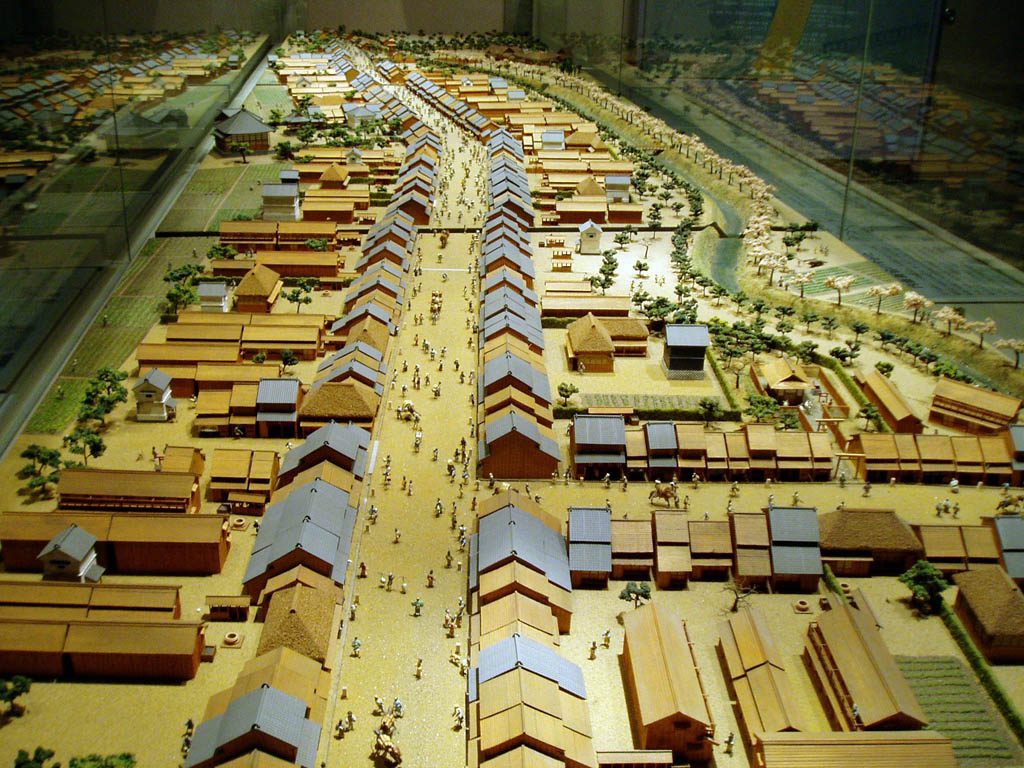
From the docking station of Toyogawa, from Ojitaka, Japan, to Tokyo's current location, it spread about a mile to the east and west, and was divided from west to upper and lower town. Takashi Takashi, who worked so hard to open Post to the city, changed his name and became the master of Yoichi Yoichi. There are fire-burns, decomposing and resuming of ponjn, and there's no constant relationship between the honjens and the honjens. In the port town, there was a growing number of vacationers and teahouses, as well as as a lot of people. It wasn't allowed to have a prostitute in Port Town, but she was kept as a lady who served her guests. There are 52 vacationers in the post town in the three-year period of 1718. Yoshihara was often the object of a plea for a prostitute trade, and this is one of the reasons why he didn't do it. And in New Year's Eve, they're doing a lot of damage in fires.
Ending
In October, Kondo Tokyo will be done away with by the Confederation. It was a decision less than 20 years before post town opened. This made the high-well house the first Kōshū Kaidō post town. Decommission ordered the removal of the second floor of the vacation house, and the function as post town was lost. The town itself will survive, but it will disappear from the mud and the population will decline. The reason the Confederation gave for its apparent end was that "Kōshū Kaidō does not need to be" because there are fewer travelers and new accommodations. However, this time of year was in the midst of a reformation of the pleasure-saving benefits of General Tokugawa Shiragawa. In the same October, there are laws that say "two women in Edo 10 '; two at a time in the same period of time, two at a time. "
Resuscitation
In July (1723) four people, such as Takahiko Takahumi, ask for post town to resume at the Inquiry. Because of the poverty of the towns in which post town was eliminated, and the burden of the high-wells-in-the-surprising town, it was said that they were going to raise the 1,100s when they resumed, but it was not allowed to resume. On the other hand, we are instructed to consider resuming of Inido's residence, Nihonbashi, from the Confederational Hospital in South Town. I'm still too far away in high-wells, so there were a lot of problems. But, in fact, the wish to resume, which was submitted by Tobaji, which was the successor to Yoshitaka in 2 years 1737) will be rejected by the long-term agreement that was made. Next comes the idea of setting up a new post town in the village on the west corner of Indo's island. There were several requests made during the year from Fukuoka, but none of them were recognized. The reason why these post town re-resurrected requests have been rejected is that they have been concerned about the problems of the Cypriot as they were about to be done.
Resuming
In April, Kondo Tokyo will be resumed. It's the first time in 50 years that I've been back, and it's called "The Return Station of Light." In the context of the resuming that has been rejected, there has been a financial breakdown in the residence of Shinagawa-jukuItabashi-shuku000. The public passage on each street increased, and the obligation of the post town was a heavy burden. (The Confederation will respond to the poverty of post town, with the relaxation of the weather and with the increase of villages that will assist post town.) In the year 1764, the Confederate of the Xinjiang Year of the Sun, the rule that had been stated to be, "There are two women in a vacation house" will be broken and the system will decide its maximum in the entire post town. Shinagawa-juku is defined as 500 and Itabashi-shuku000 residences as 150, with a large increase in women as a result. This has improved the finances of each post town, and at the same time wiped out the problem of reintroducing the Tokyo Rehabilitation. There is also a theory that the Kotahara who moved to the reign of General Tokugawa and promoted consumption policy was gaining real power within the organization, and that it was in the background leading to a resume. Still, it takes a year for post town to resume, and finally permission has been granted by Takamachi Takahashi. In the resuscitation women count up to 150 in all post town, and each year, separate from the annual pension, they have 155 more, and welfare villages have 33 locations, and so on. By resuming post town, the city will be back to normal, and in the 5th year of culture, there will be 50 vacationers and 80 teahouses. Of the Edo Abbey, Shinagawa-juku was followed by a succession of Shinagawa-jukus, whose prosperity continued to be renewed. Now there is no name left of the place called Yoichi, but the name of the person is derived from this one.
Anecdotes
His brother had an eight-year-old son. Ooji goes out to play in a vacation house in Inito-san, gets into trouble with a well-dressed girl, and exposes herself to the scandal of being beaten up by a low-level man. It is said that my brother's brother, the New Five-left Gate, who knew this, had him cut in half and delivered his brother's head to the throne and in exchange for his own knowledge demanded that the post town, which had insulted the warriors, be done away with. The incident that was reported as the cause of the end of Kondo, but it is not known whether this incident really happened.
A prostitute's order
At Indo's Tokyo, Kōshū Kaidō, there was a growing number of vacationers, teahouses, and even a cold spot. It wasn't allowed to have a prostitute at post town, but she was kept as a dancing lady by the name of serving customers. There are 52 vacationers in post town in the three-year period (1718). But Yoshihara was often the object of a plea for a prostitute trade, and this was one of the causes of the end of post town. So, in October, Kondo's Tokyo was done away with by the Confederation. Then, in the year 1764, the Order relaxed the regulations that had been stated as "two women in one vacation house" and decided to limit the limit to the entire post town. Shinagawa-juku is defined as 500 and Itabashi-shuku000 residences as 150, with a large increase in women as a result. By the way, permission has been granted to resume with the request of Takahiko Takashi. Also, in the resuming of Tokyo, it is prescribed that as well as the Itabashi-shukuKX000 residence, there will be 150 women in the entire post town.
A related piece
The prosperity of Kondo's Tokyo is also left in the world of art and literature. The following is typical. The richman's paintings are from Edo 100. A rich painting from Edo Master Beauty. I'm going to have to go with you. I'm going to go with you. The station Oo is Kōshū Kaidō, post town, in Indo. "The word "middle" is "the word" "the word 'the word 'the word'. The play of "Five Men" is based on a theory with Yoshimoto.
It's the top town next door
(Edo, Nihonbashi)
Text adapted from the Japanese Wikipedia article 内藤新宿, whose full text was translated into English for this guide by its contributors, licensed CC BY-SA 4.0. Station facts cross-checked with the road station lists (Japanese Wikipedia, CC BY-SA 4.0) and Wikidata (CC0).