Home / Ōshū Kaidō / Koshigayajuku
Koshigayajuku 越ヶ谷宿
| Ōshū Kaidō (奥州街道) | Station 3 of 27 · Nihonbashi (Edo) → Shirakawa |
|---|---|
| Nikkō Kaidō (日光街道) | Station 3 of 21 · Nihonbashi (Edo) → Nikkō |
| Present-day location | Koshigaya, Saitama, Japan |
| Prefecture | Saitama (Kanto region) |
| Next station | Kasukabejuku |
| Coordinates | 35.89663° N, 139.78311° E |
Coordinates: 35 degrees and 53 minutes and 48 seconds to the east of the latitude, 139 degrees and 46 minutes and 59 seconds to the north. It's one of the Bisama Inn.
Overview
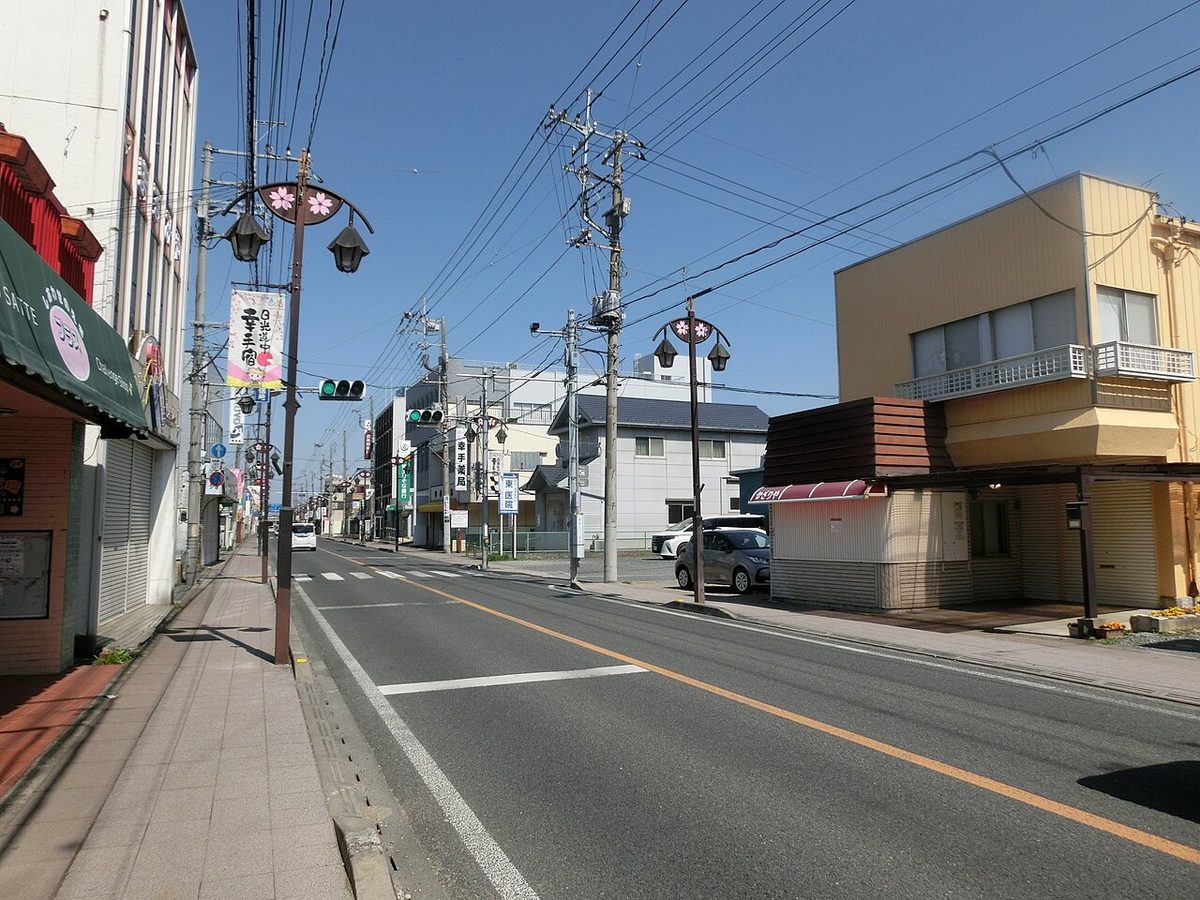
Koshigaya-juku was the third post station on the Nikkō Kaidō and Ōshū Kaidō counting from Nihonbashi in Edo, at a distance of 6 ri 8 chō from Edo (Nihonbashi). It lay 1 ri 28 chō from the previous station, Sōka-juku, and 2 ri 30 chō from the next station, Kasukabe-juku, and it was established as the Ōshū Kaidō (later the Nikkō Kaidō) was laid out. The station covered the two towns of Koshigaya (Musashi Province) on the right bank of the Moto-Arakawa River and Ōsawa (Musashi Province) on the left bank, and in scale it was second only to Senju-juku. On the Koshigaya side stood Hisaizu Shrine, and on the Ōsawa side stood Katori Shrine, the ichinomiya (premier shrine) of Shimōsa Province. Because flood-control works changed the course of the Moto-Arakawa, Hisaizu Shrine now stands on the opposite bank of the river from Koshigaya-juku.
The laying out of the Ōshū and Nikkō highways began in 1602 (Keichō 7), and after the founding of Nikkō Tōshōgū in 1617 (Genna 3), roads, post stations and corvée (sukegō) arrangements were further developed as the travel of the lords increased. Koshigaya-juku became an official station of the Ōshū Kaidō soon after the establishment of the Edo shogunate. Across the Moto-Arakawa, Ōsawa-juku was established at Ōsawa — part of Shinpō-shō, which had been incorporated into Saisei District (Saitama District) of Musashi Province before 1612 (Keichō 17) — as a corvée village supporting Koshigaya's relay transport. The development of Koshigaya-juku was completed in 1654 (Jōō 3), when, following the establishment of the sankin-kōtai system, the completion of Nikkō Tōshōgū and the institutionalisation of the shogun's pilgrimages to Nikkō (Nikkō shasan), the station functions of the two towns were combined, Ōsawa village being the former corvée village.
There were river landings nearby, and at Gamō Village (present-day Koshigaya City) was the Fujisuke landing. Large volumes of goods were shipped and traded there not only in the Edo period but also through the Meiji and Taishō periods.
Koshigaya-juku has records of damage from fires and earthquakes — great fires, because its housing was dense and urban, and damage from the Ansei earthquake.
Leather
Up to the early part of the ages, the Jajitani region was confined to the present and former rough river, which was the main stream of the Tokugawa River. The left side was confined to the lower state of Kabuki, and the right side to the west. The area that is now surrounded by the Hakoku, the Hakoku, and the Hakoku River has been transferred to China of the lower state of Fukuoka Valley. Up until the time of the Civil War, it was a boarding house built by Mr. Koono, a descendant of Fujihara Hideo, and Mr. Koota. The area south of Hakoku River belongs to the Shikoku prefecture. The Izu shrine, which is reported to have been settled by the members of the party, the members of the Shikoku tribe, the Kogyo Kogyo, and the Sunbaes, was revered by the Noya-tō and Kisaichi-tō, bands of the Musashi Seven Bands of medieval warriors, and later became the clan shrine (ujigami) of the Aida family, the local strongmen who ruled Koshigaya. In the Middle Ages, Guangiya side of Japan (Westerly County) and Ozawa side of the river. For this reason, the Jiangani side had the Kunihito shrine of Shikoku, who is a member of the Shikoku people's tribe, and the Ozawa side had the largest Miyagi shrine under control. There was also a description of the city that flourished as the site of the city of Seikichi by the time I was old. Thus, since Koshigayajuku was so concentrated in politics, economic, and religious faith from the end of the Middle Ages, it led from about 7 years to the late state's retreat.
The development of Nikkō Kaidō
After the Schoki Akira, the road, station, and resorts were organized. From that time forward, Essa, Nanjo, Chichi, Ninono, and Ninono will be the Eastern religion. The rest of the region was what we call "Gentile" and was the ruling district of Kanto County. The path of the Hajijunji was followed by an eight-way route over the banks of the Hajira River and the Hajiga River.
Koshigaya Yuka is specified
Koshigaya Yuka was captured by the Post town of Kadnya right after the establishment of the Edo. Ozawa Village, on the other side of the river, has become a town town and has been established as a settlement on the trails of Java. The horse - drawn structures in both cities were combined, and on the traffic, they were made Kosakigayayaku. (17) Previously, the Hanzawa on the left side of the present river had already been compiled from the lower state of Kasai. The development of Koshigaya Yuka is said to have been completed by both the post-town functions of the villages of Oshima, Japan, in 314 C.E. In the beginning of Edo period, and in the 3rd year of Fukuoka, 1650, I gave my Najiko's license to Guadaru Ozawa and others. In the year 9 and 1696, it was reported that the size of Osamaji and Ozawa was formed in the shogun regime, that 5,000 land children were given to both Yakashi and Ozawa towns, each with its 5,000 land children.
Ojikani-sama
Mr. Diya was set up by the Tokugawa family in 9 years. In this area, there was originally a group of maroons from the Hijitani Valley, where they are said to have moved the teahouse in the trees by means of the house. In addition, I'm sure you're not allowed to go into the forest by the Shiragawa Document. These were swampy areas along the river. There were many wild birds, families, and Hideko Tokugawa stayed with the Lord, as well as hunting in public view. According to Tokugawa's, 2 years later, 1649. 3rd year 1657) and since the Great Fire of the Sun-day destroyed the Edo castle, it was transferred to the square of the Edo Castle. The site was developed as a field and has reached the present time. The Lord's name remains the name of the place, and is the official name of your town when it appears.
Osama and Ozawa's top town
In Diya and Ozawa, the main jobs in Pott Tung were focused on the Shinda clan. I decided that I would have both horse and horse to work. On account of the reform of the station structure at Koshigayajuka and the loss of many of its traditional authorities, and the loss of its traditional authority, Thus, the town structure of Kosakayajuka built a distinctive town structure that shows the concentration of shops and the concentration of travel functions in Osama Town. According to the records of the total number of gates in Jabuya and Ozawa, the total number of houses in Tokyo is 383. We had 63 prime ministers, 30 local tenants, 262 stores. According to The General Book of Sundo Inquisitors, the number of houses in Osamaji is 542 in all. There were 125 marketholders and 412 local rents and stores.
Meshi-mori Hatago Inns
The number of Koshigayajuku journeys, including honjin and ZXX281X, occurred during the year of weather maintenance. In time, the rice baskets focused 23 houses on the bridge's right side of the bridge and built the largest flowerhouse in Nikkō Kaidō, except for a thousand residential areas.
Innuendo station
The administration unit of Kosakayaya Yuka was divided into the main town, Central and New Town, and Ozawa's city into a boarding house, a room, and a room. I got a license of 5,000 Najiko, Osama and Ozawa, each one. For Najiji, it was 120 horsemen, 21 footers, and 5 foot earners. According to the Book of the Sundo and Inhabitants, 14 years 1843) "Koshagayajukka has set up 52 caravans and wanjnjnn. The number of families in the house was 1,005 and the population was 4,603. The range of port town is the range from the current Kosakaya valley across the original river and from the city's Tokyo area. The traditionally prosperous Jajidani side had a higher proportion of merchants than the caravan, while the Ozawa side had a pure post town shape, and so was Honjing Wichi-honjing. The size was 1, Wichi-Honjen's family on Hanzawa's side. It's a 16-team journey with a description of our journey with the same category as Hannjein, and it shows the importance of our residence.
Fuji River Bank
The Toto River Bank was the river bank in Kosakamura. The Toto River Bank was also called the Tokugawa and the Tokugawa Bank as well. The Toto River bank was located on the left side of the river and in the confluence of the feather moat. The name Toto River Bank comes from what is said to be "because the main name of the Takahashi clan was Fuji. " It was carried from a nearby village. When this river bank flourished, it was in the Miyagi and Yuuki period. According to Japan's County Village Journal, the boat owned by the river bank has a description of "10 ships, 19 of the riverboats, and 10 of the horse - made tea boats." After Edo period and during the Great War, there was a great deal of shipments and deals. But when Gujidani station was set up on the East Railway in the year 9 of Great Britain, it was gradually replaced by railway transportation and was abandoned in early Japan.
The big fire of Koshigayajuku
Koshigayajuku was put in danger of a great fire because it was urban and densely populated. In January of 1794, 167 houses were burned to the ground. (1797) In March, there are also a number of major fires, such as burning and burning honjin and many others.
The damage from the security earthquake
There were earthquakes in the northern part of Tokyo, and those in the valley from ancient documents measured about five quakes. The damage caused by this earthquake is reported at "Kogayani, near Edo, " which" is a rare earthquake in the early days of January and early hours of the day, and two and a half boulders in the early hours of the morning. " These documents indicate that the damage caused by a low-level earthquake in Tanimura was not great.
Where is it? Where is it?
The original year tablet tablet. It's right there. - I'm from the Izu shrine. Ozawa Akasaka. It was first designated as a national registered culture at a sub-sider shop under the tree - Koshigaya.
The house next door
I don't know what you're thinking.
References
Koshigaya, Koshagaya History, Volume 4, Kosakagaya, 1972. NLJP: 76408/12. Shizunada Garden Book (1644 to 1648). (Sundo-Sundo. 1843) "The General Book of Innitut. Iseshiki, "The Convention of the Conventions of the Prostitution of the Prosperity"; "The Manstrual Society of Man"; "The Man's Literature of the University of Japan; 1993. Kosakigaya, "Kosashigaya History" Volume 4, Kosakigaya; 1972. Iseshima Hotel. Toshio Takeshita (1984). Yajiji of our town's history. "The historical considerations of General Tokugawa's house are in the hands of Sun worship." Nakamura-sama Matsumoto-samaji, "Current of the Edo Earthquake," Volume 19, Historical Earthquake Research Institute, 2003, 32-37. Kashildoriko, Murashima, From the History and Environment of the Ships and the Environment. >>Tokyo: "The city formation and border structure of the Kadkayoshiyaku" (Iseshima Institute of Science and Technology). Yamasaki Yoshimi, "To the ancestors of the Kosakita Tayo Guard, " and Kosakigaya's National Research Institute, 1991. "The Name of Saitama," first edition of 1993, pages 1033-1034. The Koshigaya Industrial Information Network, which runs through the winter of Koshigaya Yuka. (Weiback Machine, June 17, 2016)
Text adapted from the Japanese Wikipedia article 越ヶ谷宿, whose full text was translated into English for this guide by its contributors, licensed CC BY-SA 4.0. Station facts cross-checked with the road station lists (Japanese Wikipedia, CC BY-SA 4.0) and Wikidata (CC0).