Kanbara-juku 蒲原宿
| Tōkaidō (東海道) | Station 15 of 53 · Nihonbashi (Edo) → Kyoto |
|---|---|
| Present-day location | Shimizu-ku, Shizuoka, Japan |
| Prefecture | Shizuoka (Chubu region) |
| Distance from Nihonbashi | About 148 km (by the historical station tables) |
| Next station | Yui-shuku — about 3.9 km on |
| Coordinates | 35.11996° N, 138.60557° E |
Kanbara-juku (蒲原宿, Kanbara-juku) was the fifteenth of the fifty-three stations of the Tōkaidō. It is located in what is now part of the Shimizu-ku ward of Shizuoka, Shizuoka Prefecture, Japan. It is one of four former post stations located in Shimizu-ku.
History
The original Kanbara-juku was decimated by a flood in the early part of the Edo period, and was rebuilt shortly thereafter.
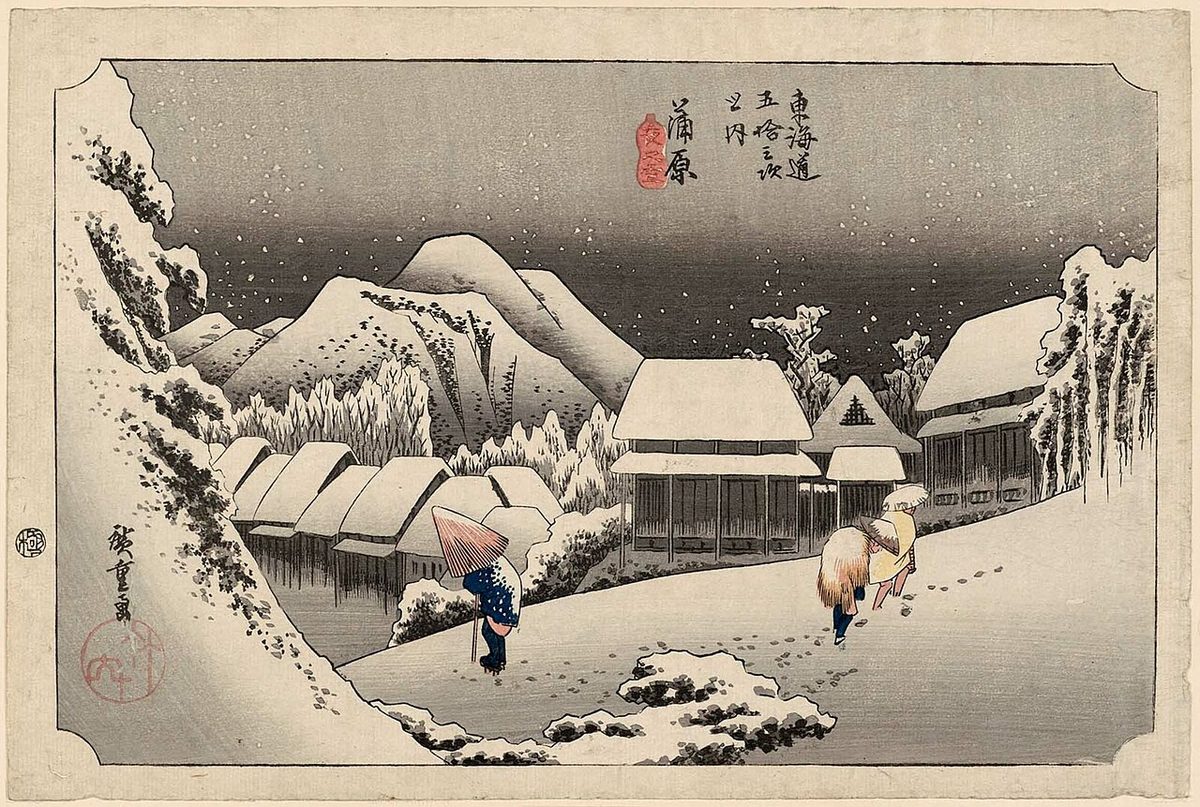
The classic ukiyo-e print by Andō Hiroshige (Hōeidō edition) from 1831–1834, depicts a mountain village at nightfall, through which three people are struggling under deep snow. It is a rather strange composition, as Kanbara is located in a very temperate area warmed by the Kuroshio current offshore, and even a light snowfall is extremely rare.
In Japan (as elsewhere), many villages in different parts of the country have the same name. Hiroshige apparently often relied on existing prints and guidebooks. It seems likely that he mistakenly used an image of a different Kanbara: a village in the mountainous Gunma prefecture.
The Hiroshige print features on the cover of Weezer's 1996 album Pinkerton.
Neighboring post towns
- Tōkaidō
- Yoshiwara-juku - Kanbara-juku - Yui-shuku
Text adapted from the English Wikipedia article Kanbara-juku by its contributors, licensed CC BY-SA 4.0. Station facts cross-checked with the road station lists (Japanese Wikipedia, CC BY-SA 4.0) and Wikidata (CC0).